|
Version
|
Description
|
|
18.9
23-10-26
|
List of v.18 updates
18.9 (10/23/2026): Release documentation
- Abrasion ablation and statistical evaporation
(18.8.2, 18.8.5-6, 18.8.12-13)
- Experimental pre equilibrium research
(18.8.14, 18.8.16-64)
- BI peak search and Grid PID analysis
(18.8.70, 18.8.72-73, 18.8.75-76, 18.8.80-82)
- Beam transport and secondary reaction cross sections
(18.8.1, 18.8.65-67)
- Prompt Radiation batch isolation
(18.8.68-69, 18.8.71)
- Light Particle production utility
(18.8.83-91)
- Reaction Dynamics Explorer — Extended development report
(18.8.92-110)
- Abrasion Fission 3EER caching
(18.8.111-113)
- Nuclear data and excitation or barrier plots
(18.8.3-4, 18.8.15)
- Satellite applications and operational improvements
(18.8.7-11, 18.8.74, 18.8.77-79)
- Isomer gamma data and shared interface updates
(18.8.114-117)
- Manual light particle correction factors
(18.8.118)
18.8 (08/28/2026)
18.7 (08/22/2026): Release Documentation
- Automated charge-state calculations: LISE++ batch-file generation and direct execution of ETACHA4 and GLOBAL
- IsomerAPI: isomer and γ-ray database / decay-scheme utility
- ETACHA4 v.4.9.1: model selection and extended batch-mode calculations
- GLOBAL v.4.8.1: batch mode and numerical-accuracy refinements
- Fragmentation and Abrasion-Ablation calculations:
improved model selection and one-nucleon pickup plotting
- Calculation stability and user-interface improvements
18.6 (08/15/2026) : Major developments by topic
- Major development of Silent Mode and automated batch calculations
- Major development of the Prompt Radiation utility
- Light-particle production analysis and physics-model updates
- Secondary-reaction physics improvements
- Calculation stability, memory management, and long-run reliability
- Configuration, charge-state, wedge/profile, and user-interface improvements
- Development and integration of associated reaction and charge-state codes:
GEMINI++ 3.3.0
and
ETACHA4 4.8.13
18.5.19 Light particle production topics (07/30/2026)
- momentum distributions
- production CSs
- production by ARIS blocks
18.5 (07/25/2026)
- Summary of versions 18.4.11-18.5
- ARIS Prompt radiation utility manual
18.4.11 (05/29/2026)
- Updated CS/AA plotting and minimization tools
- Prefragment search and Universal Parameterization Updates
- Memory-safety and numerical-stability fixes for AA de-excitation/distribution calculations
18.4 (05/16/2026)
- Generation of a gap-filled RIKEN fission cross-section table
- PAC4 rates were implemented in LISE++
- AA-minimization: correction for unbound nuclei
- Distribution-Mode Fix: Extended Optics with Wedge Thickness Defect
18.3 (04/30/2026)
- LSODA added as a new integration model and set as default
- Improved handling of stiff systems
- Optimization of Radiation Calculator routines
18.2 (03/27/2026)
- Silent mode functionality update
- Spatial and momentum distribution outputs
|
|
18.1
12-02-26
|
Official version 18.1
|
|
|
List of v.17 updates
-
18.0.25 (02/12/2026)
- Reactions in wedges (update)
- Power deposition (update)
-
17.18.11 (01/11/2026)
- Fit / minimization infrastructure (ΔBE, AA)
- Separator tuning on FOI via ΔBρ/Bρ % shift
17.18.7 (01/09/2026)
Recommended Abrasion-Fission settings
17.18 (01/04/2026)
Invariant-Mass Enforced (IME)-Holes excitation energy method
17.17.53 (12/28/2025)
ΔBE-systematics minimization
17.17.29 (11/30/2025)
- - AA-minimization:
- - Cycling local line to overcome local minima
- - Diagonal scaling (DSCL) in LM minimization
- - Convolution model corrections (high energy)
- - USER cross-section files from current model
17.17.17 (11/24/2025)
- Apply recommended abrasion reaction settings
- AA Minimization / Cross-Section Systematics
- FRACS / SPACS / Reaction Models
- Graphs / UI Enhancements
- Data / Publications / Tables
- Miscellaneous & Integration
17.16.6
(10/04/2025)
- Save LISE plot to PNG file
- ETACHA 4.7: Equilibrium thickness functions
- ETACHA 4.6: Perturbation parameter analysis
- 144Sm and 92Mo BMA CS sets
- Windows Explorer preview for LISE files
- Information section in the LISE file
- Implementation of SPACS parametrization
17.15.27
(09/01/2025)
Bayesian-averaged cross-section sets derived from abrasion-ablation calculations employing 8 mass models with experimentally determined parameters
17.15.13 (08/24/2025)
- File / text viewer: limit raised, search
- Threshold option for labels in 2D plots
- Update of dialog and gauge parent pointers
- Block ID : displayed in Setup dialog, revision in Config files
17.15 (08/20/2025)
- LISE++ Performance:
- Gauge optimized (progress updates throttled, ...)
- MSVC Release build optimized, debug overhead removed
- Windows 11E power-throttling disabled for consistent speed
- ETACHA 4.6: (project by A.Ray)
- LSODA: integrator (automatic Adams/BDF switching, ...)
- Euler: integrator for quick, simple problems
- Adams BDF: integrator available as standalone option for stiff problems.
17.14 (08/05/2025)
Beam Dump dialog: added Lock BD settings, improved statistics
3D visualization: updated 3D-envelope and graph panels.
Excel integration: restored after Microsoft update (v.2504+)
Dark mode: added and refined in the Preferences dialogs
Digital signing: executables, DLLs, Excel macros, and installer signed with MSU Sectigo certificate
Installer: moved to Actual Installer v10.3
Setup dialog: multi-row drag-and-drop, erase, and satellite options (project by D.Kaloyanov)
General updates: new dBE defaults, faster file loading, wedge color fixes, updated icons/logos, improved dark-mode cancel dialogs.
17.13.12 (05/06/2025)
3D-Envelope: Panel Development (project by A.Tarasova)
17.13 (04/08/2025)
- Secondary target yields in MC
- Momentum distribution characteristics plots
- User CSs in Abrasion-Fission plots
17.12 3D items in envelope plots
17.10 LISE for Excel64
17.09 Hybrid mode, dBE, Save-set read, ..
17.08 Fission: Angular acceptance cut;
Angular straggling vs. de-focusing
17.07 Convolution model, FRIB logo, LDM3
17.06 ARIS Beam Dump
17.05 Secondary reaction products kinematics; Silent mode
17.03 AA vs. Secondary Reactions; Plot distributions copy-paste
17.02 Wedge position shift
|
|
17.0
11-11-23
|
Official version 17
|
|
01/21/23 -
08/28/23
|
List of v.16 modifications
16.17.20 Adjust Slits on Fragment of Interest
16.17.02 Compiled with MSVC; package optimization (2)
16.16.13 Log-Normal excitation energy model
16.16.01 Update of the Isomer database (project by D.Kaloyanov);
 Migration of LISE databases to SQLite format
16.16.01 Package optimization with Profilers (project by A.Tarasova)
16.15.17 2D-plot X vs. A/q
16.15.12 Linking Quadrupoles to Segment
16.14.20 Updates 16.14.1-20: matrix between blocks, ...
16.14.14 Loading ARIS experimental settings (save-sets)
16.13.01 New Transmission option: "CENTRAL CUT" (important!)
16.12.15 Working with e-configurations
16.12.01 Migration of LISE databases to SQLite format
16.16.01 Package optimization with Profilers (project by A.Tarasova)
16.15.17 2D-plot X vs. A/q
16.15.12 Linking Quadrupoles to Segment
16.14.20 Updates 16.14.1-20: matrix between blocks, ...
16.14.14 Loading ARIS experimental settings (save-sets)
16.13.01 New Transmission option: "CENTRAL CUT" (important!)
16.12.15 Working with e-configurations
16.12.01 eARIS configurations
16.11.16 Optimization to work with extended configurations
16.11.13 ARIS configurations update
16.11.12 Fragment Production in Material (update)
|
|
16.6
06-08-22
|
Version 16.6
Migrating to Qt 6.3 and C++17
Selection of transmission calculation methods
to use with beam dump slits
LISE graphics library revision
Improving safety of the package
Revision of solenoid block operations
Improving compatibility with Linux and macOS
|
|
16.4
13-07-22
|
Version 16.4
Account for material lengths in optics
Update of gas mixture use
Exponential Abrasion Model (v.16.3)
LISE++ site : secure connection
Important updates (Reaction mechanism, ETACHA, bugs)
|
|
16.2
19-03-22
|
Version 16.2
Block names: nickname, official, comments
Q3D absolute path envelope
Abrasion-Fission 3EER model : excitation energy choice
|
|
16
10-11-21
|
Official version 16
The LISE++ package has been ported to the Qt framework for compatibility with multiple operating systems. The benefits include 64-bit operation, cross-platform compatibility (Windows, macOS, Linux), and the ability to take advantage of future computational improvements.
The new version is named LISEcute++ to indicate a new generation different from the previous LISE++ Borland-based versions.
|
|
|
|
13.4
24-01-20
|
"Finger" block
|
|
|
|
12.0
07-01-20
|
Official version 12

- Using files from previous versions in LISE++ v.12
|
|
|
Selected topics of the v.10-11.* development
Plotting and passing both two fission fragments
Two Fission Fragments registration efficiency BATCH
Universal parameterization ('Convolution' method) revision
AA model minimization to describe user cross sections
Initial Fissile Nuclei Analyzer (IFN)
AF 3EER: High Z isotopes production
Loading experimental A1900 settings into the code
2018: status of mass tables in the code
Special Wedge optics
Other notable updates
List of Modifications : version 10-11.*.*
|
|
|
|
10.0
18-11-16
|
Official version 10

|
|
|
Selected topics of the v.9.10 development
Update of Fusion reaction mechanism
2nd order optics minimization
Radiation Residue Calculator
Reverse technique & configurations
Decay Branching Ratio Database
Electrostatic Dipole: Second order optics
FRIB Theory Alliance mass predictions
Ionization energy database & Ion mass calculator
Utility: Rutherford scattering and Angular straggling
LISE++ utilities in the Qt framework
List of 9.10.* versions

|
|
|
New extended configurations:
"EMMA" (TRIUMF)
"DRAGON" (TRIUMF)
"FMA" (ANL)
"SECAR" (MSU)
"HRS" (MSU)
"TwinSol" (UND)
S3 (GANIL)
SHELS (JINR)
|
|
|
|
9.9
30-12-14
|
Official version 9.9
|
|
|
Selected topics of the v.9.8 development
S&E construction methods
Quadrupole effective length
Multipole : Quad & Sextupole superposition
Compensating dipole
Range Optimizer (Gas cell utility) update
Discussion of configurations in LISE++
|
|
|
New extended configurations:
"BigRIPS" (RIKEN)
"MSP144+Q2" (FLNR/JINR)
"SHELS" (FLNR/JINR)
"PRISMA" (LNL)
"MARS" update (TAMU)
|
|
|
|
9.7
01-11-13
|
Official version 9.7
|
|
9.6.139
17-10-13
|
- Versions 9.6.134-9.6.139
- Plotting envelopes & rotation blocks
- "MARS" separator extended configuration
|
|
9.6.133
09-10-13
|
- Versions 9.6.119-9.6.133
- Gas cell range utility update
- Neutron & Gamma induced reactions
in the Kinematic Calculator
|
|
9.6.117
06-08-13
|
- Optical blocks in the code: E-quad, E-bender, Shift
|
|
9.6.65
03-07-13
|
- Update of Analytical solution for two-body
and fission reaction transmission
|
|
9.6.46
24-06-13
|
- Differential Cross Sections
|
|
9.6.29
19-04-13
|
|
|
9.5
06-03-13
|
Official version 9.5
|
|
9.4.93
18-02-13
|
- Acculinna2 extended configuration
|
|
9.4.90
30-01-13
|
- RESOLUT configurations
- RF-buncher block
|
|
9.4.52
28-10-12
|
- NRV : LISE++ 's partner site
|
|
9.4.34
27-08-12
|
|
|
9.4.11
11-05-12
|
|
|
9.4.3
16-03-12
|
- Asymmetrical momentum distributions
|
| 9.3.13
16-03-12
|
|
|
9.3
06-01-12
|
Official version 9.3
|
|
9.2.159
09-12-11
|
Fall 2011 update (II)
- Update of isotope discovery history
- Update of Statistics window
- Extended version of the Isotope dialog : Decay analysis
- Decay mode revision
- Color editing of the table of nuclides
- Update of LISE for Excel
|
|
9.2.126
11-11-11
|
Fall 2011 update (I)
- Yield Plot (“Distribution” method) gated on downstream block
- Spontaneous fission dialog & plots
- Corrections: potential energy at fission barrier
- Corrections: Electromagnetic Excitation plot
- New Options for nucleus identification in 2d-plot
- Modification of the "Utilities" menu
|
|
9.2.107
10-06-11
|
- Extended (element) configurations upgrade
|
|
9.2.97
12-05-11
|
|
|
9.2.66
27-01-11
|
- Important update: Revision of analytical transmission calculations
|
|
9.2.57
21-01-11
|
|
|
9.2.33
10-12-10
|
- Calculation of magnet transport matrices within LISE++and links with maps from other codes (such as COSY)
|
|
9.2.7
20-08-10
|
- Transmission calculation revision
with the new Angular Distribution class
|
| |
Official version 9.1
compatible with 64-bit Windows
|
|
9.1.19
09-08-10
|
|
|
8.4
17-09-09
|
Official version 8.4
|
| |
|
|
8.1.2
23-02-08
|
- Optimization, Improvement
|
|
8.0.29
21-09-07
|
- Energy deposition in materials (Monte Carlo solution)
|
|
8.0.14
03-08-07
|
- Two body reactions (kinematics)
|
|
8.0
04-05-07
|
|
|
7.9
20-08-06
|
Fusion-Fission
- Production cross-sections
- Transmission of fragments through a fragment separator
- Combination of consecutive transmission-product calculations
for several reactions
|
|
7.8
06-06-06
|
New Utilities
- Twinsol(solenoid) utility: ray trace and matrix solutions
- ISOL catcher utility
- Wedge-wedge optimization
- Kinematics calculator: Mott scattering
- Decay channel analysis
|
| 7.7
|
Isomers in LISE++
- Database of isomeric states
- Isomeric gamma-spectrum
- Identification 2D plot in coincidence with gamma rays
|
|
7.6
01-12-05
|
RF separation system
|
|
7.5
09-09-05
|
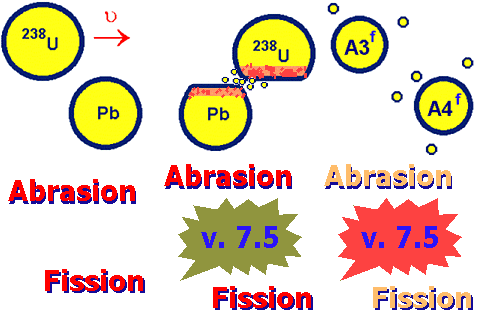
- Abrasion-Fission
- Physics
- De-excitation Breakup channel
- Dissipation effects in fission
- Fission barriers and secondary reactions reexamination
-
New utilities
- Target & Wedge optimization
- Charge state combination optimization
- Calculation batch mode
- Cross-section analysis using the AA model
- LISE++ block structure development
- Faraday cup block
- Append block from file
|
|
|
7.2
09-09-04
|
-
New masses: Database AME2003
-
New LDM fits
|
|
7.1
14-06-04
|
|
|
6.6
25-Feb-04
|
-
New NSCL option and configuration files
-
Monte Carlo simulation of fission fragment transmission
|
|
|
6.5
16-Jan-04
|
-
ISOL method
-
mass separator MASHA
|
|
|
6.4
09-Dec-03
|
-
Total revision of Abrasion-Ablation
-
LISE's package for "unprivileged" users
-
User's Mass Excess file
-
User's Cross-Section file
|
|
|
6.3
16-Sep-03
|
-
NonEquilibrium Charge States Calculations
-
"GLOBAL" for "Windows"
-
Fission channel in evaporation subroutine
|
|
|
6.2
29-May-03
|
- New optical blocks:
- gas-filled dipole
- electric dipole
- compensating dipole
-
Bρ analyzer
-
Code "Charge"
-
Sub-barrier fusion
-
Transport envelope calculation package
-
Corrections
|
|
|
6.1
30-Nov-02
|
|
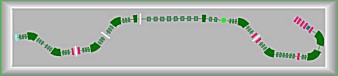
Block structure: design your own spectrometer
|
|
| |

|
5.15
08-03-02
|
5.15.1 PACE4 - update (13-03-02)
Fusion residue transmission
|
5.13
07-01-02
|
PACE4 (PACE2, Julian - fusion-evaporation code)
Option and configuration files (*.ini,*.opt,*.lcf)
File Converter FORTRAN->C
NSCL download address has been changed! now http://lise.nscl.msu.edu/download/
|
5.11
26-11-01
|
Checking for the new version (update)
Option of primary beam scattering
|
5.10
23-10-01
|
The Handbook of nuclear spectrometry by J.Kantele
|
5.9
28-09-01
|
Units converter
|
5.8
10-09-01
|
a. automode for Abrasion-Ablation
b. on-line LISE's analysis of experimental plots
|
5.7
10-08-01
|
LISE & EXCEL
|
5.6
19-07-01
|
LISE & Internet
a. access to isomers and TOI database
b. check to the new version
c. mail and registration from the code
|
5.5
10-07-01
|
Options files
Bρ Scanning Plot
Print of the dialogs
"Physical Calculator" and "Goodies"
|
5.4
25-06-01
|
5.4 Abrasion-Ablation 1.3
5.3 Prefragment excitation energy
5.2 Start configuration
5.1 Transformation ''AMeV" to ''MeV/u"
|
4.20
15-06-01
|
ATIMA
(ATomic Interaction with MAtter)
|
4.18
09-06-01
|
Evaporation Calculator
Abrasion-Ablation
|
4.17
09-06-01
|
Kinematics Calculator
|
4.16
07-06-01
|
LISE web-sites
Installation
|
4.15
23-03-01
|
Plot calibration utilities version 4.15
Calibration of physical parameters
Two-dimensional plots in the "calibration" mode
New options of plot
NSCL & The LISE code - version 4.14
Calibration of A1900 s dipoles
Support of NSCL spectres
Balls animation for Windows NT
Optimization of Monte-Carlo plots
|
4.13
23-02-01
|
Scattering calculator - version 4.13
Mass-separator mode - version 4.12
Cutout of the second dipole
New plot dE-X in the dispersive focal plane
New opportunity to select the velocity of reaction products
New image of the dialogue Beam
It is necessary to work:
The
automized search of two-dimensional peaks in spectrum and definition
of their characteristics (BI code) - version 4.11
Prefragment search - version 4.10
Attempt to extrapolate cross-sections of exotic nuclei
Calculation of isotope characteristics with semi empirical formula
|
4.9
25-10-00
|
Momentum distributions of fragments
Universal parametrization
|
4.8
20-09-00
|
Reduction of a fragment output due to reactions
Calculation of the secondary reactions contribution
in a fragment output
|
4.7
18-08-00
|
Secondary reactions in a target
Mechanism of Reaction
|
4.6
15-06-00
|
Stripper
after target: contribution in fragment distributions
Charge state distribution in transmission calculation
|
4.5.4
26-05-00
|
Monte Carlo method for two-dimensional plots (version 4.5)
In-built cubic spline procedure (version 4.4)
|
4.3
12-04-00
|
development
|
4.2.5
07-04-00
|
Calculation of material thickness between start energy and energy rest has been added in the Physical Calculator.
see "Physcalc.gif"
|
4.2.4
06-04-00
|
Utilities → LISE3's calibration (dipoles, Wien-filter)
Transformation between values of
Bρ, B real(affiche),B red(lu), I(amper)
for the LISE dipoles D3.DP1(D3) and D3.DP2(D4).
see "Calibr.gif"
|
4.2.3
05-04-00
|
Utilities → Curved degrader
Calculation and plots of curved degrader profiles for different operating
modes (achromatic, monochromatic, homogeneous).
see "Dlgcurve.gif"
see "Pltcurve.gif"
|
4.2.2
04-04-00
|
Utilities → Calculation of angle on the LISE target
Calculation of magnetic fields (also dipoles currents ) of two
dipoles to get the determined angle on the target
see "Angle.gif"
|
4.2.1
03-04-00
|
Energy distribution plot after wedge has been corrected
|
|
4.2
30-03-00
|
1. New dimension kW for entering the intensity of the primary beam
2. New result file - Energy, TOF, Energy Loss in materials
3. Configuration files
4. Unbound - new characteristic mode to plot in the nuclide chart
5.  New command - transmission calculation of nuclei chosen by the previous command, Area Transmission Calculation.
6. New plot A/Q - Y (position in the final focal point after the Wien filter)
7. Corrections |
4.0.30
16-02-00 |
Menu "Calculations" → Reaction characteristics
Reaction kinematics (two-body relativistic calculations)
. The user may set the excitation energy of outgoing fragments.
Plots ("ThetaFragment in CMS & Theta Lab" and "ThetaFragment in CMS & Energy Lab" ) have been added.
Reaction characteristics dialog was created
|
4.0.29
11-02-00 |
Ion charge state distribution for low energy
A new ion charge-state distribution for low energies has been added. (K.Shima et al., NIM 200 (1982) 605)
New plot - "Average charge state plot"
In the dialog "Physical Calculator," the user may observe the average charge state of the selected ion after materials.
|
4.0.25
01-02-00 |
Some sound applications have been inserted into the code
The laboratory banner has been inserted in the lower-left window.
|
4.0.17
20-01-00 |
Different profiles of a degrader (wedge)
in the intermediate dispersive focal plane

|
| 4.0.14 |
* Possibility to calculate the full spectrometer matrix
* Calculation of the beam vector in the IDFP and Final Focal Point
* Input new parameters x/θ and y/φ in the optical matrices to calculate
transmission.
see "Optic.gif"
|
| 4.0.10 |
- Global reconstruction of modules to calculate transmission
- Modification of two existing plots and creation of a new " Bρ-separation plot "
- Real Bρ plot immediately after target
- Horizontal distribution in IDFP in Tm (as was initially)
- Horizontal distribution in IDFP in mm (as was made in October, 1999)
- Solution of the problem " large object on the target and global non-achromatism (chromatism)"
- Wien angular acceptance input
- Creation of Wien-filter angular distribution
- Creation of "block" structure in the code to calculate transmission.
- Possibility to choose a X-plane or Y-plane velocity selection of Wien-filter.
- Correction of the TOF-calculation bug in the dialog "GOODS" and the plot ''dE-ToF".
|
|
4.0.9 |
- Make a warning "Save Changes in file" before
- to exit from the program
- to load another file
|
|
4.0.8
|
- Solution of the problem with the "edge" effect in range plots.
- Solution of the problem with the dialog "Calibration" (the dialog for changing the thickness of setting detectors) and for the Range Plot if the user takes a detector set not at 0 degrees.
- Input of additional energy loss calculation method on the base H-parameterization.
- Input of a possibility to calculate energy loss into gaseous media.
- Addition of an energy-loss component: nuclear energy stopping powers, which is very important for low-energy particles and for gaseous media.
- Creation of range tables beginning from 10 keV/A for work with low-energy particles.
- Creation of a dialog to choose a compound target from the list of all possible compounds based on the Ziegler compound file
|
| 4.0.7 |
- Creation of an identification table for mouse position
(Nucleus name, Events, dE,E, TOF) for bidimensional plots like it was in
a DOS-version. (also X,Y -identification for one-dimensional plots).
|
| 4.0.3 |
- COMPOSITE TARGETS and MATERIALS.
- new format of LISE-file due to introduction of new class "compounds" in the code.
- LISE files from version 3.* are readable by code with versions higher than 4.0.3
- LISE files from versions 4.0.0 - 4.0.2 are not readable by the code with versions higher than 4.0.3
- Increase the nuclides isotopes up to Z=130 and N=200
- Approximation of ranges for Z=104-130 on the base of work F.Hubert et al , AD & NDT 46 (1990) 1.
- Input of ranges for H based on the work of L.C.Northclifee and R.F.Schilling, NDT A7 (1970) 233.
- Corrected "old" and added new LISE configuration files for different setups.
|
3.9.1 -
3.9.5 |
- Zoom for plots (Clear Zoom)
- Correct energy straggling (Error in NIM A257)
- Possibility to view and edit the in-built database
- Added calculated values to the database for some isotopes of interest (25-30O, *F, *Ne)
- Plots of data (S1n, S2n, S1p, S2p, T1/2, Qα, β-decay,
Mass excess) from the in-built database for constant Z,N,A,N-Z.
see "Database.gif"
|
3.7-3.8
22.09.99 |
1. It is possible to switch the "3d-balls animation" and "Navigation map" windows on and off. These settings
are written in the "lise.ini," as are all settings of the "preference" menu and
"plot" menu. Therefore, nowadays a LISE data file is shorter due to the absence of these settings.
2. The new EPAX 2.15 is default. This final version of EPAX parameterization (R.Summerer & B.Blank) |
| 3.6. |
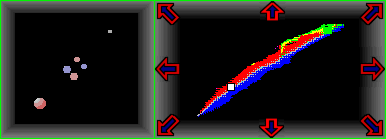
Navigation Map
|
|
3.5
01.07.99
|
The directories "Range" and "Isotopes" no longer exist.
All tabulated ranges in the new version are written in the binary file
"range.bin" which is found in the LISE directory. The file of the nuclide
chart "table.iso" is also found in the LISE directory. Default cross
section parameterization is 3 - "EPAX 2.13 : K.Summerer et B.Blank
(1999) |
|
3.4.4
24.06.99
|
1. User may save plot's data to file clicking on the special icon in process of work with one-dimensional plots. Data in this
TXT-file are separated by the symbol "TAB"
2. The bug (Energy loss into the material defined by
User) in the menu GOODIES has been found and correct.
3. Configuration files of the fragment-separator COMBAS [NIM A426 (1999) 605-617] and the M5678 spectrometer at Dubna
have been added to the list of config-files. |
|
3.4
19.05.99
|
 Version 3.4 - Description Version 3.4 - Description
|
3.3.06
25.03.99 |
Fixed: a bug in the "Wien Filter" vertical angular distribution
|
3.3.0
18.01.99 |
Built-in database. By right-clicking
on an isotope of interest in the table of nuclides, the user can view the transmission of that isotope, its
characteristics (S1n, S2n, S1p, S2p, T1/2, Qα, β-decay,
mass excess), and its energy after the second dipole.
The following data sets were used for the LISE database:
1. THE 1995 ATOMIC MASS EVALUATION by G. Audi and A. H. Wapstra
S1n, S2n, S1p, S2p, Qα, β-decay,
mass excess (recommended values)
2. The code "NUCLEUS" — I. Duflo, G. Audi et al., CSNSM, Orsay
Half-lives (T1/2) |
3.1 -
3.2 |
The optical parameters are entered as transport matrices. Phase space and the average
momentum of the input beam were added to the calculations. /See the help for the dialog "Optic"/
The new D6 dialog allows calculation of the platform rotation angle and the magnetic field of dipole D6. /See the help for the dialog "D6"/
All dialogs include a "Help" button with the corresponding reference in the HLP file
Calculation results for a selected isotope can be displayed in a new window by right-clicking on a nucleus in the table of nuclides
The program can be executed from the command line with parameters. Clicking on a
LISE data file loads it into the LISE program. Before doing this,
choose in Explorer: Options → File Types; then assign the LISE program
to the extension *.LIZ to open LISE data files. Beginning with this version,
the results file is saved in the same directory as its parent data file.
The following items were corrected:
- Reading of the BMP file of the LISE spectrometer
- Printing of bidimensional plots: the number of counts per second for a given isotope in logarithmic scale is shown
to the right of the element name
- The optimal plot for the "charge state" option
- Display of slit width and momentum acceptance in the "Setup" window
LISE operates under Windows NT
|